 Skip to content


Assistive Technology for Deaf and Hard of Hearing: Every Tool That Can Help You
Over 1.5 billion people live with some form of hearing loss worldwide. Yet most of them never learn about the full range of assistive technology available to them.
That gap is the problem this article solves. Whether you are deaf, hard of hearing, or supporting someone who is, this guide covers every major category of assistive technology – what it does, who it helps, and how to choose.
- Written by: karishma Rautela
- Review by: Karishma Rautela
What Is Assistive Technology for the Deaf and Hard of Hearing?
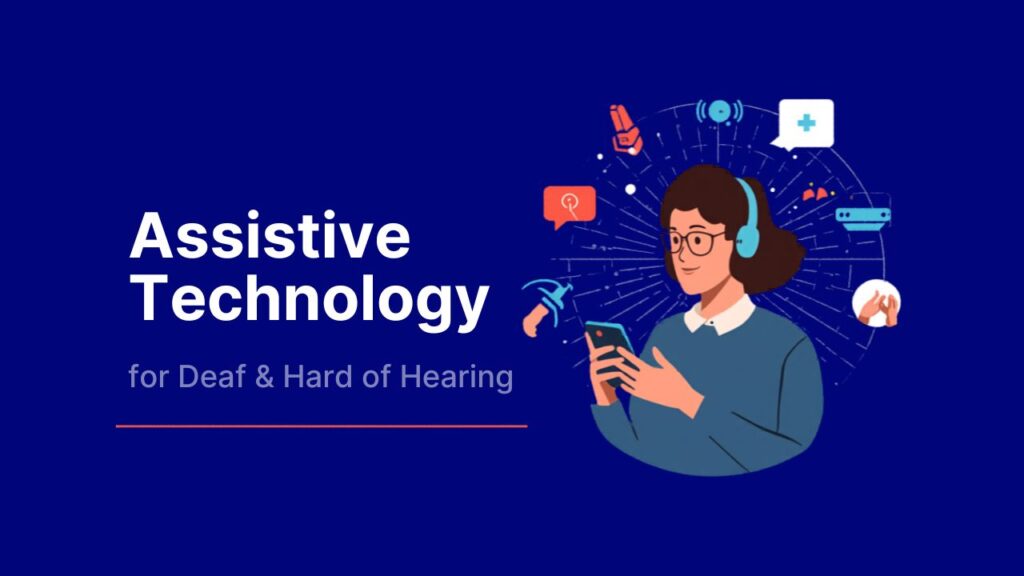
Assistive technology for the deaf and hard of hearing refers to any device, app, or system that helps a person with hearing loss communicate, stay safe, and live independently.
It is not just hearing aids. The category includes everything from real-time captioning apps on your phone to flashing doorbells at home to FM systems used in classrooms.
The goal is simple: bridge the gap between a person with hearing loss and the world around them.
Hearing Aids - The Starting Point for Many
Hearing aids are the most commonly known assistive device for hearing loss. They amplify sound and are most useful for people with mild to moderate hearing loss.
Modern hearing aids have come a long way. Many now connect via Bluetooth to smartphones, stream audio directly, and use AI to filter background noise.
But hearing aids do not work equally for everyone. People with profound or total deafness often find limited benefit from hearing aids alone. That is where other assistive technologies step in.
Can Deaf People Hear With Hearing Aids?
This is one of the most common questions people search for. The honest answer is: it depends on the degree of hearing loss.
For people with severe to profound deafness, hearing aids can make some sounds detectable but do not restore normal hearing. They amplify what little auditory function remains. For those with no functional hearing, cochlear implants or non-hearing-based assistive tools are often more effective.
Cochlear Implants - When Hearing Aids Are Not Enough
Half the Price
A cochlear implant is a surgically implanted device that bypasses damaged parts of the ear and directly stimulates the auditory nerve. It is not a hearing aid. It does not amplify sound – it creates a digital version of sound.
Cochlear implants are typically considered for people with severe to profound sensorineural hearing loss who gain little benefit from hearing aids.
They require surgery, audiological support, and a period of rehabilitation. But for many users, they significantly improve their ability to understand speech. If you want to read more about this type of hearing loss, check out our article on sensorineural hearing loss.
Assistive Listening Devices - A Whole Category Most People Miss
Assistive listening devices, or ALDs, are tools that help people hear better in specific situations – classrooms, places of worship, theatres, meetings, and one-on-one conversations.
Unlike hearing aids, ALDs do not require a prescription and many are available without a specialist visit. They work by reducing the distance between a person’s ear and the sound source.
FM Systems
FM systems use radio frequency signals to transmit sound directly to a receiver worn by the user. A speaker wears a small microphone, and the listener receives clear audio without background noise interference.
FM systems are widely used in schools for deaf and hard of hearing students. They dramatically improve speech clarity in noisy environments where hearing aids alone struggle.
Loop Systems (Induction Loops)
A hearing loop transmits sound electromagnetically to hearing aids or cochlear implants with a telecoil (t-coil) setting. Many public spaces – including airports, banks, and churches – are equipped with hearing loops.
When a hearing aid user switches to t-coil mode, they receive sound directly from the loop system, cutting out all background noise.
Infrared Systems
Infrared systems use light waves to transmit audio. They are commonly found in theatres, courtrooms, and conference rooms.
They offer good sound quality but only work in line-of-sight environments. They cannot transmit through walls, which makes them suitable for indoor-only use.
Speech-to-Text Apps - Real-Time Captioning on Your Phone
This is where modern assistive technology has made the biggest leap forward.
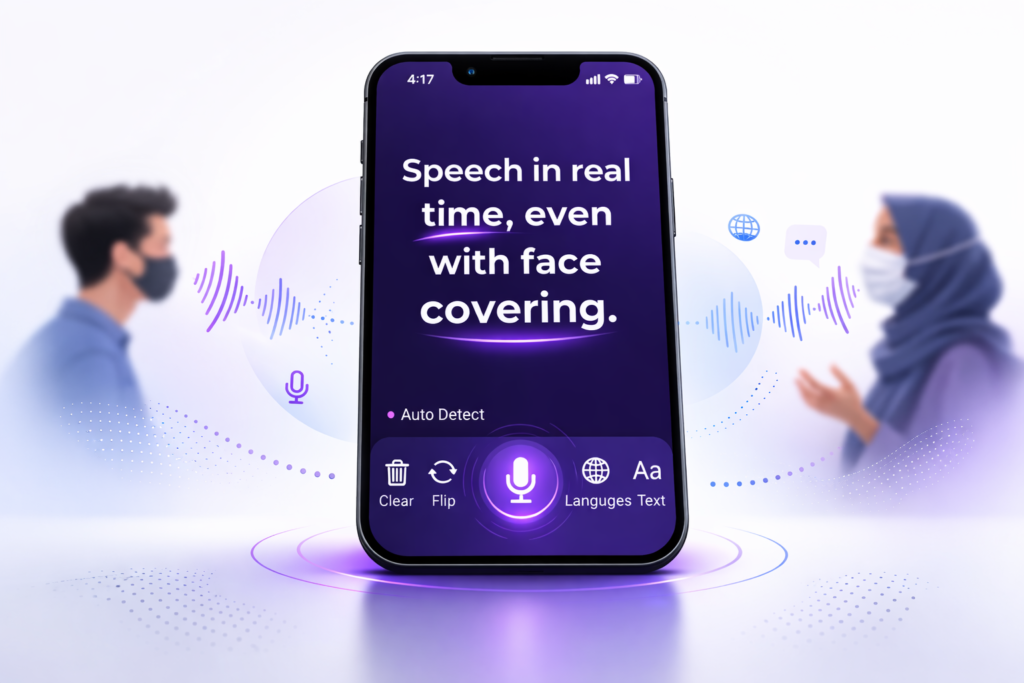
Speech-to-text apps turn live spoken words into text on a screen – in real time. No delay. No specialist needed. Just open the app and point it at the speaker.
For deaf and hard of hearing people, this changes everything. You can follow a conversation at a café, in a meeting, at a doctor’s appointment, or during a lecture – all from your phone.
iScribe is one of the most accurate live transcription apps available for iPhone users. It supports 100+ languages and works offline too – making it a reliable tool in any situation. You can explore it here: The best live transcribe app for iphone.
If you are comparing live caption apps, our breakdown at Live Caption apps for deaf gives you a clear side-by-side of what is available.
What Makes a Good Speech-to-Text App?
Not all captioning apps are equal. When choosing one, look for:
Accuracy – does it handle different accents, fast speakers, and background noise? Speed – does text appear in real time or with a delay? Language support – how many languages does it cover? Offline capability – does it work without the internet? Export options – can you save or share the transcript?
iScribe checks all of these boxes. Read more about its top features at Top 5 Features of iScribe.
Alerting Devices - Staying Safe at Home
One part of assistive technology that often gets overlooked is home safety for deaf individuals.
Standard smoke alarms, doorbells, and alarm clocks rely on sound. For deaf and hard of hearing people, these can be life-threatening gaps. Alerting devices solve this by converting sound into light or vibration.
Common Alerting Devices for Deaf People
Flashing doorbells – when someone rings the bell, lights flash inside the home instead of making a sound.
Vibrating alarm clocks – instead of a beeping alarm, the clock shakes the bed or pillow to wake the person up. These are sometimes called bed shaker alarms.
Flashing smoke and fire alarms – emit bright strobe flashes when triggered, ensuring people with profound hearing loss are alerted to danger.
Baby cry signalers – detect a baby’s cry and trigger a light flash or vibration throughout the home.
Visual alert systems – connected to phones, doorbells, and alarms, these systems trigger light signals throughout the home whenever any alert is triggered.
These devices are not just convenient. For many deaf individuals, they are essential for safety and independence.
Communication Devices for Deaf People
Beyond listening, deaf and hard of hearing people also need tools that help them communicate outward – especially in phone-based situations.
Captioned Telephones
Captioned phones display real-time captions of everything the other person says during a phone call. The user can hear what they can through their hearing device and read the rest on screen.
Services like ClearCaptions and similar providers offer these at no cost to qualifying users in the US.
Telecommunication Device for the Deaf (TDD / TTY)
TDD (Telecommunication Device for the Deaf), also known as TTY (teletypewriter), was one of the earliest communication tools for deaf people. It allowed users to type messages over a phone line.
While largely replaced by smartphones and modern apps, TDD devices are still used in some settings and remain legally required in certain public services.
Video Relay Services (VRS)
VRS allows deaf sign language users to make phone calls through a video interpreter. The deaf user signs to an interpreter via video, who then speaks to the hearing caller on their behalf.
This bridges communication between the deaf community and hearing people who do not know sign language.
Apps for Deaf and Hard of Hearing People
Smartphones have become one of the most powerful assistive tools available. There are now dedicated apps for almost every communication need.
Here are some of the categories worth knowing:
Live transcription apps – convert speech to text in real time. iScribe is a strong option for iPhone users. See the full comparison at 7 Best Apps for People with Hearing Loss.
Speech-to-text apps for recorded audio – useful for transcribing meetings, lectures, and voice memos. Check out our guide on iPhone voice memo to text at How to Convert iPhone Voice Memo to Text (Step-by-Step Guide)
Communication apps – allow deaf users to type messages to hearing people quickly during face-to-face interaction.
Sign language learning apps – help both deaf and hearing people learn ASL or other sign languages. Our complete American Sign Language guide is a good place to start.
Visual notification apps – flash the screen or vibrate when sounds are detected around the user, such as doorbells or someone calling their name.
Assistive Technology for Deaf Students in the Classroom
Students who are deaf or hard of hearing face specific challenges in educational settings. The good news is that classroom assistive technology has improved significantly.
FM systems and sound-field systems help students hear the teacher clearly without ambient noise interference. Closed captions on videos and lectures make academic content accessible. Real-time captioning services, sometimes called CART (Communication Access Realtime Translation), provide live captions during classes and lectures.
You can read more about CART and how it works.
Many universities now have dedicated accessibility services for deaf students. Our guide to the best universities for deaf students covers the top institutions and what each offers.
Assistive Technology Rights for Deaf Students
In the United States, deaf students have legal rights to assistive technology and accommodations under the Americans with Disabilities Act and Section 504 of the Rehabilitation Act.
Schools are required to provide reasonable accommodations – which can include FM systems, captioned videos, real-time transcription, and note-taking support.
If you are a parent or student unsure of what to request, speaking to a school’s disability services office is the best starting point.
How to Communicate With a Deaf Person Without Technology
Technology helps vastly, but it is not always available. Knowing how to communicate with a deaf or hard of hearing person naturally is just as important.
Face the person directly when speaking. Do not cover your mouth. Speak clearly but at a normal pace – exaggerated speech can actually make lip reading harder. Use written notes or your phone’s notes app when needed.
We have a full guide on this at how to communicate with a deaf person worth reading whether you are hearing or hard of hearing yourself.
Conclusion - The Right Tool Changes Everything
There is no single assistive technology that works for every deaf or hard of hearing person. Hearing loss is personal. What helps one person may not help another.
But the range of tools available today is genuinely impressive. From hearing aids and cochlear implants to real-time captioning apps and flashing doorbell systems, there is a solution for nearly every situation.
The key is knowing your options. And now you do.
If you are looking for a live transcription app that is built for deaf and hard of hearing people, iScribe is worth trying. It is accurate, fast, and works in the real world – not just in ideal conditions.
Frequently Asked Questions
What are assistive listening devices?
Assistive listening devices are tools that help people with hearing loss hear better in specific environments. They include FM systems, hearing loops, infrared systems, and personal amplifiers. Unlike hearing aids, they are typically used for situational listening – in a classroom, church, or meeting – rather than all-day wear.
What do deaf people use to hear?
Deaf and hard of hearing people use a wide range of tools depending on their level of hearing loss. These include cochlear implants, hearing aids, FM systems, real-time captioning apps, speech-to-text software, and visual alert systems. Many people use a combination of these tools across different situations.
Is there a good speech-to-text app for hard of hearing people?
Yes. iScribe is one of the most accurate and accessible options, especially for iPhone users. It converts live speech to text in real time, supports over 60 languages, and works offline. It is designed specifically with deaf and hard of hearing users in mind.
How do deaf people wake up to alarms?
Deaf people typically use vibrating alarm clocks or bed shakers that physically vibrate the mattress or pillow at the set time. Some use flashing light alarms or smart home systems that trigger multiple alerts simultaneously.
What is an FM system for hearing impaired people?
An FM system uses radio frequency signals to wirelessly transmit a speaker’s voice directly to a receiver worn by the listener. It eliminates the effect of distance and background noise, making it particularly useful in classrooms and group settings.
Can a fully deaf person benefit from hearing aids?
For people with total or profound deafness, standard hearing aids often provide minimal benefit because there is not enough residual hearing to amplify. Cochlear implants are generally the more effective option for this group, though outcomes vary depending on the individual and the cause of their hearing loss.