 Skip to content


What is CART? Complete Guide to Communication Access Real-Time Translation
CART, which stands for “Communication Access Real-Time Translation,” is a specialized service that transforms spoken language into written text instantaneously. Through the integration of advanced technology and a unique device called a stenotype machine, CART services capture verbal communication and project it as readable text onto screens. This technology empowers individuals who are Deaf or hard-of-hearing to read and comprehend conversations as they occur in real-time.
- Written by: karishma Rautela
- Review by: Mahipal Dosad
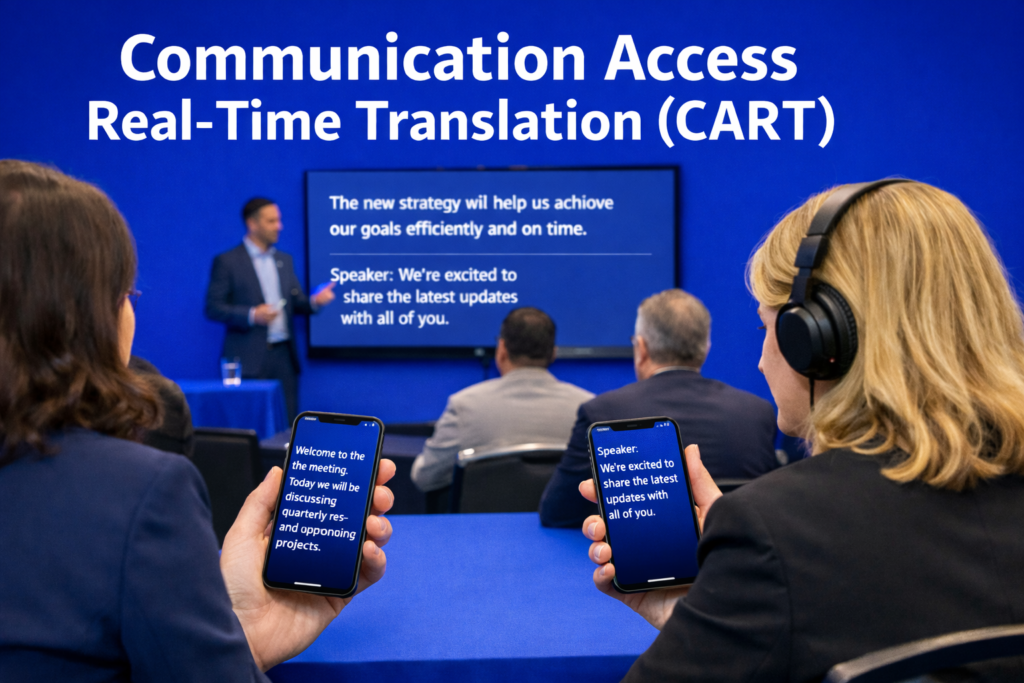
Effective communication forms the foundation of success in professional environments, educational institutions, and healthcare facilities. Without qualified interpreters or specialised assistive technology, individuals who are Deaf or hard-of-hearing face significant obstacles in comprehending and participating in spoken exchanges. CART (Communication Access Real-Time Translation) provides a transformative solution to these communication challenges.
The CART Process Explained
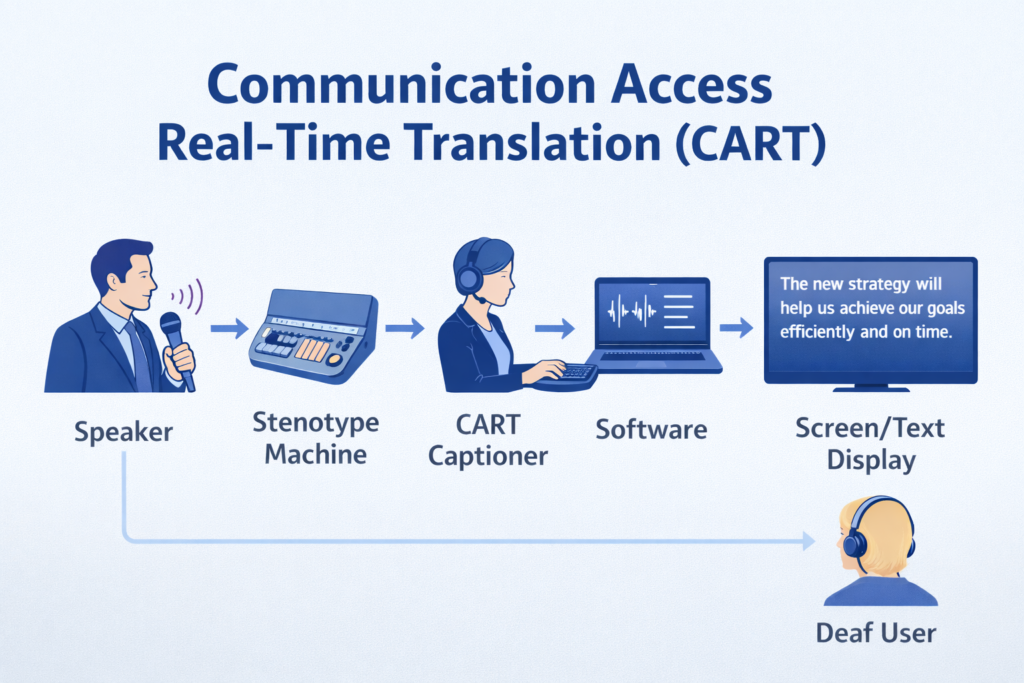
CART professionals, commonly referred to as CART providers or captioners, participate in meetings, conferences, lectures, or various events where clear communication is paramount.
These specialists utilize stenographic equipment to monitor spoken content and transcribe it into text format using a stenotype machine. The transcribed content appears immediately on display screens, enabling individuals with hearing impairments to track discussions seamlessly and engage as active participants in the dialogue.
Stenotype Machines: The Core Technology
A stenotype machine represents the primary tool that CART providers employ to document spoken language. While superficially resembling a typewriter, it features a substantially reduced number of keys. Rather than entering individual letters consecutively, stenographers simultaneously press multiple keys to represent complete words or phonetic combinations.
This specialized shorthand methodology facilitates rapid and accurate speech transcription. The device automatically converts these key combinations into readable text that displays on screens. CART providers undergo extensive professional training to master stenotype operation effectively.
CART Service Locations and Applications
CART services are deployed across diverse environments, including university lecture halls, corporate boardrooms, medical consultation rooms, legal proceedings, and virtual platforms. Whether you’re attending a conference at the Walter E. Washington Convention Centre in Washington, D.C., participating in educational programs at local libraries like the New York Public Library, or joining business meetings in Chicago’s Willis Tower, CART can be configured for on-site delivery or remote implementation based on participant requirements. Wherever live captioning becomes necessary, CART services should be readily available.
Key Benefits of CART Services
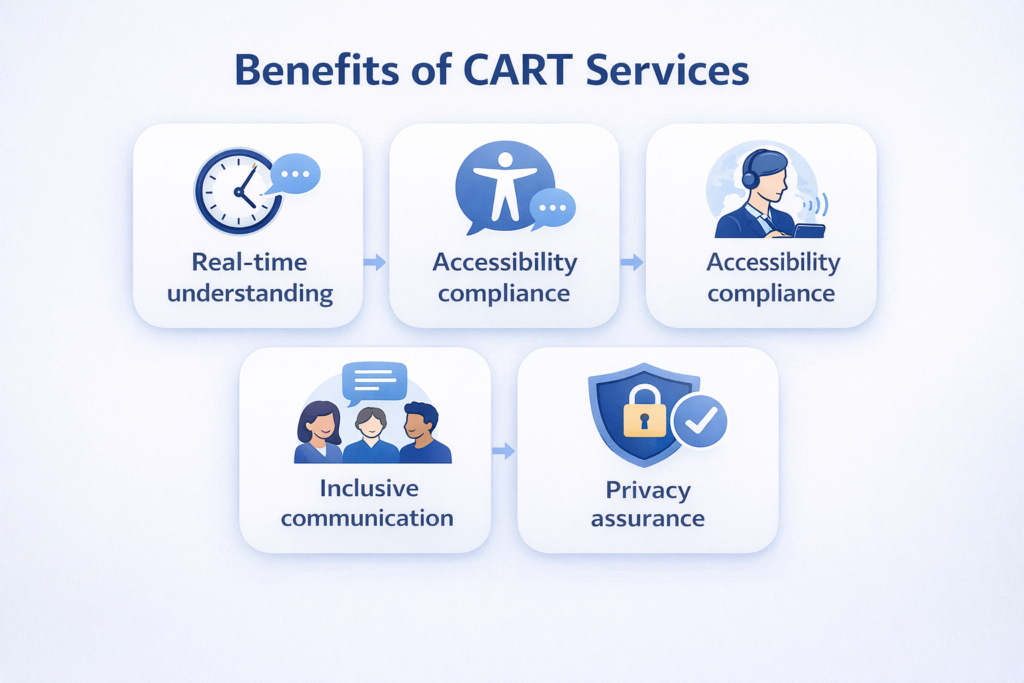
Improved Communication Access: CART effectively eliminates communication barriers for individuals who are Deaf or hard-of-hearing. The service enables complete participation in conversations, business engagements, and classroom environments, promoting genuinely inclusive communication experiences.
Superior Transcription Quality: CART professionals receive rigorous training to transcribe verbal communication with exceptional accuracy and speed. This specialized education ensures that text appearing on screens represents a trustworthy translation of spoken content.
Live Interactive Capability: CART delivers text translations without perceptible delay. This immediacy means that individuals with hearing disabilities can follow conversations as they develop, facilitating active engagement and enabling timely responses.
Versatile Implementation: CART adapts seamlessly to various formats and settings, whether physical locations like conference centres or digital platforms for remote participation, ensuring comprehensive accessibility.
Privacy Protection: CART maintains confidentiality standards, making it appropriate for sensitive discussions in medical facilities, legal offices, or private corporate meetings.
CART and Legal Accessibility Standards
CART serves a crucial function in guaranteeing equal communication access for the Deaf and hard-of-hearing population. Within the United States, the Americans with Disabilities Act (ADA) mandates communication accessibility for individuals with disabilities.
CART is officially recognized as an approved assistive technology solution and is frequently mandated in educational settings, from elementary schools to universities like Harvard and Stanford, and professional workplaces to ensure ADA compliance.
From courtrooms in the Supreme Court building to community centers in neighborhoods across America, CART services help institutions meet their legal obligations while creating truly accessible spaces.
CART Services: Comprehensive Summary
CART (Communication Access Real-Time Translation) represents an invaluable communication technology that significantly enhances accessibility for individuals who are Deaf and hard-of-hearing. By providing instantaneous text translations, CART allows the DHH community to participate actively in workplace discussions, academic lectures, medical appointments, and social gatherings.
The substantial benefits of CART, including enhanced communication access, accurate transcription, real-time interaction capabilities, versatile deployment options, and privacy safeguards, establish it as an essential resource for developing accessible and inclusive environments.
As our society advances toward comprehensive inclusivity, CART continues dismantling barriers and enabling effective communication for all individuals. Whether implemented at iconic venues like the Kennedy Centre for the Performing Arts, local community colleges, corporate headquarters in Silicon Valley, or healthcare facilities like the Mayo Clinic, CART services ensure that communication remains accessible to everyone, regardless of hearing ability.
Frequently Asked Questions
What exactly does CART stand for and what is its purpose?
CART stands for Communication Access Real-Time Translation, a professional service that converts spoken words into text instantaneously. Its purpose is to provide communication accessibility for individuals who are Deaf or hard-of-hearing in various settings.
How does CART different from closed captioning on television?
While both provide text versions of spoken content, CART is delivered live by trained professionals for in-person or virtual events. Closed captioning for television is often pre-recorded or uses automated systems with lower accuracy rates.
Who provides CART services and what qualifications do they need?
CART services are provided by certified stenographers or captioners who have completed specialized training programs. These professionals typically hold certifications from organizations like the National Court Reporters Association (NCRA) and maintain high accuracy standards.
Can CART be used in educational settings like universities?
Absolutely. CART is widely used in educational environments from elementary schools to universities, helping students with hearing impairments access lectures, seminars, and group discussions. Many institutions are legally required to provide CART services under ADA guidelines.
How accurate is CART compared to automatic speech recognition?
CART typically achieves 98-99% accuracy when provided by qualified professionals, significantly exceeding automated speech recognition systems. Human CART providers understand context, accents, and specialized terminology that automated systems often miss.
Is CART available for remote or virtual meetings?
Yes, remote CART services are widely available and have become increasingly popular for virtual meetings, webinars, and online conferences. CART providers can join meetings remotely and deliver captions through various platforms and screen-sharing technologies.