 Skip to content


How to Communicate with a Deaf Person Clearly in Real-Life Situations
Communicating with a deaf or hard-of-hearing person may seem difficult at first, especially if you are not familiar with sign language or accessibility tools. Many people assume that speaking louder will solve the problem, but in reality, effective communication is about clarity, visibility, and patience.
In everyday situations like meetings, classrooms, or casual conversations, misunderstandings can happen easily if the right approach is not used. The good news is that you don’t need special training to communicate better. Small adjustments in the way you speak and interact can make a significant difference.
- Written by: karishma Rautela
- Review by: Mahipal Dosad
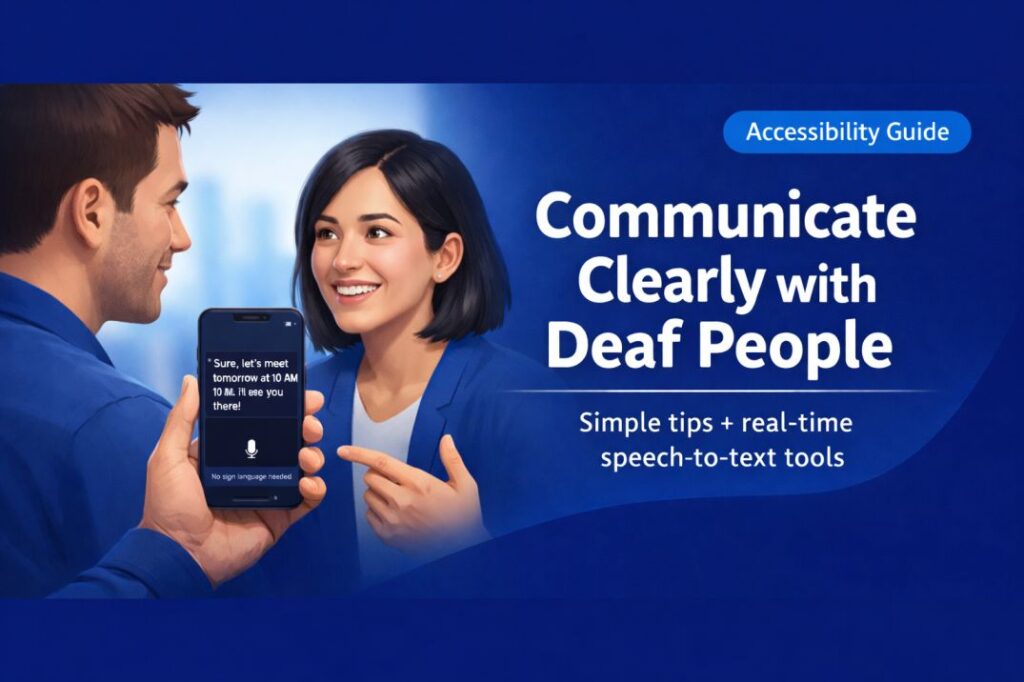
This guide will help you understand the challenges and give you simple, practical ways to communicate more effectively and respectfully.
5 Simple Ways to Communicate Better
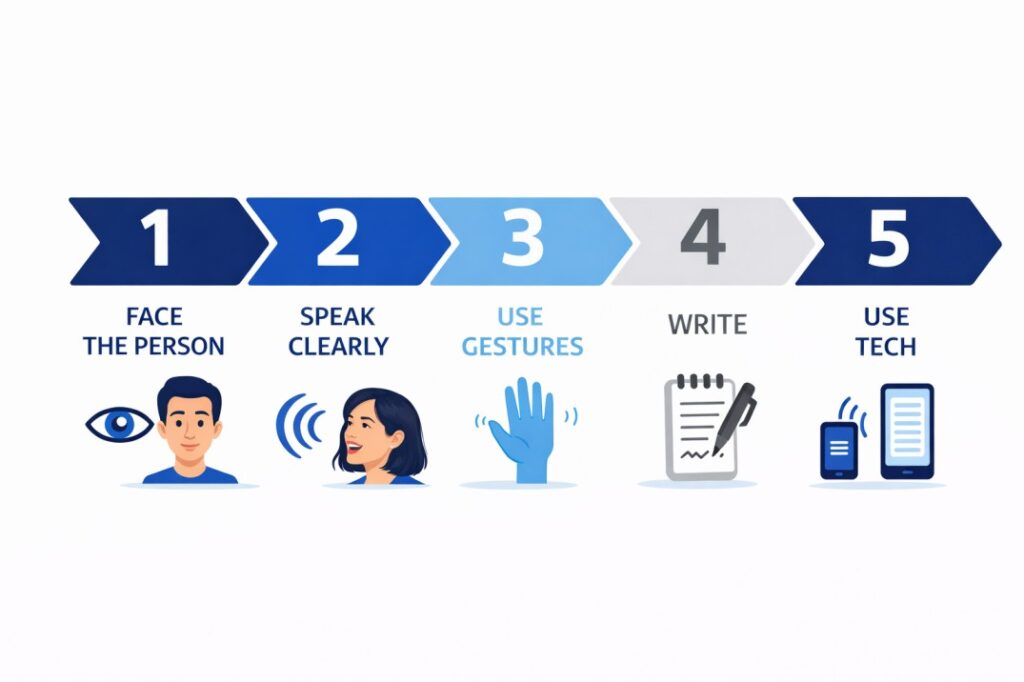
These five tips work right away. You do not need to practice for weeks. Just try one today and you will already be doing better.
1. Always Face the Person
This one simple habit changes everything.
When you look away, cover your mouth, or speak while walking, a deaf person loses access to your words completely. They cannot read your lips or see your expressions if they cannot see your face.
So before you say anything – make eye contact first. Then speak.
- Stay at the same eye level when possible – sit down if they are sitting
- If you need to look at something, pause your words, look at it, then look back before speaking again
- Never cover your mouth while talking – not with your hand, a pen, a cup, or anything else
It sounds simple because it is. But most people forget to do it.
2. Speak Clearly – Not Louder
This is the most common mistake people make.
When someone does not understand us, our first instinct is to raise our voice. But shouting does not help a deaf person at all. It just distorts your mouth shape and can feel rude or aggressive.
What actually helps is slowing down a little and speaking each word clearly. Think of it like reading a sentence out loud – steady and calm.
Do not over-exaggerate your mouth movements either. It might feel helpful, but it actually makes lips harder to read, not easier. Just speak naturally, at a comfortable pace, with clear pronunciation.
3. Use Your Face and Hands
Good news – you already do this. You just need to do it a little more intentionally.
Your facial expressions carry a huge amount of information:
- Raised eyebrows mean you are asking a question
- A nod means yes or “I understand”
- A slight frown or head tilt shows you are confused
Your hands help too. Point at things. Hold up fingers to show numbers. Mime drinking a glass of water if you are asking someone if they want a drink. These small gestures add instant clarity without any training required.
Just make sure your hands and gestures are visible – in front of your body, not down at your sides.
4. Write It Down When You Need To
Some moments call for writing – and that is perfectly fine.
Writing is not a sign that the conversation failed. It is just another way to communicate. Think of it like switching lanes on a road. You are still getting to the same place, just using a different path.
Use your phone’s notes app, a notepad, a whiteboard – anything nearby. It works especially well for:
- Names and numbers that are hard to lip-read
- Addresses or directions
- Anything technical or important that must be understood correctly
Keep your sentences short. Use plain words. And if you are showing your phone screen, make the text bigger so it is easy to read at a glance.
5. Use Technology – It Has Come a Long Way
Your phone is one of the most powerful communication tools you have. Use it.
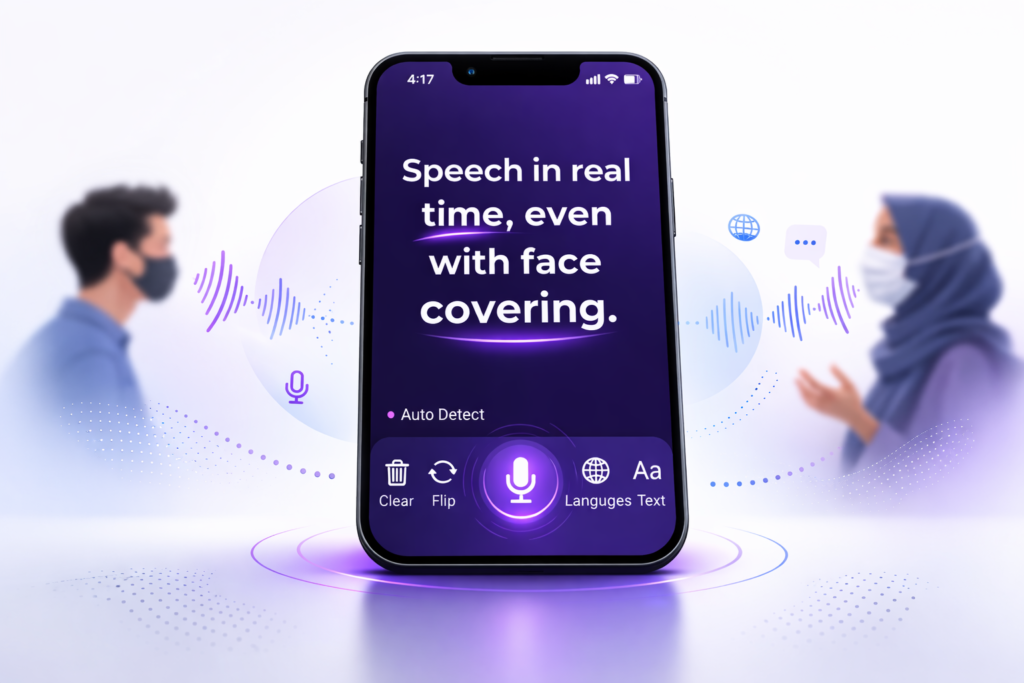
There are free apps that turn your spoken words into text on screen in real time. A deaf person can simply read what you are saying as you speak. No writing needed. No delay.
Apps worth knowing:
- Google Live Transcribe – Free on Android, converts speech to text instantly
- Apple Live Captions – Built into iPhone, works for any audio near the device
- iScribe – Great for real time Conversation, Meetings with multiple people talking.
Download one of these before you need it. Having it ready means you will never be stuck in an awkward silence again.
Why Communication Can Be Challenging
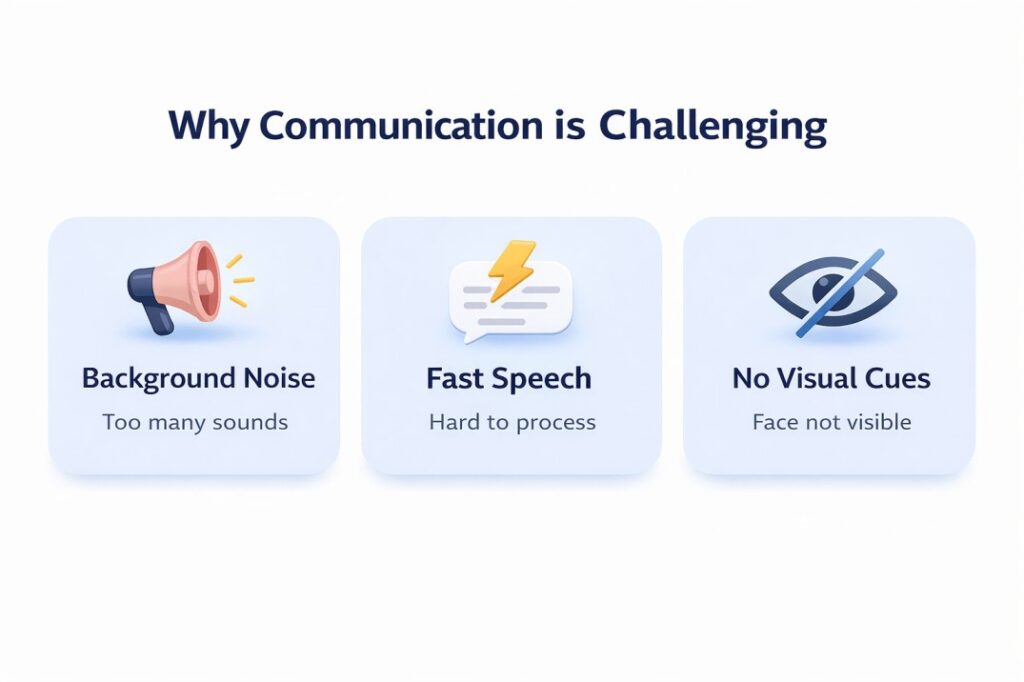
Before we talk about what to do, let us quickly understand why communication feels difficult in the first place.
It is not because anyone is doing something wrong. It is because hearing people and deaf people use very different ways to understand the world.
Hearing people rely on sound. Deaf people rely on sight – things like your face, your expressions, your hands, and the shape of your mouth.
When those two worlds meet without any preparation, gaps happen. And those gaps can lead to confusion, frustration, or just an awkward silence that nobody wanted.
Background Noise
Background noise can make communication difficult for anyone, but it creates a much bigger barrier for deaf and hard-of-hearing individuals. In places like restaurants, offices, or public spaces, multiple sounds compete at the same time, making it harder to focus on a single voice.
Fast Speech
When people speak too quickly, it becomes difficult to process information in real time. Deaf individuals often rely on lip movement, facial expressions, or context to understand what is being said. Fast speech reduces the time available to interpret these signals.
Lack of Visual Cues
Visual communication plays a critical role. If your face is not clearly visible, it becomes much harder for a deaf person to follow what you are saying. Turning your head away, covering your mouth, or speaking in poor lighting conditions can reduce understanding significantly.
Why Traditional Methods Don’t Always Work
Many people rely on basic communication methods, but these approaches often have limitations, especially in real-world situations.
Lip Reading is Difficult
Lip reading may seem like a complete solution, but it is not as accurate as most people think. Many words look similar when spoken, and only a small portion of speech can be understood through lip movements alone.
This means that even skilled lip readers may miss important details. Lip reading works best when combined with other communication methods, such as gestures or written support.
Writing is Slow
Writing messages can help, but it often slows down the conversation. In fast-moving situations like meetings or group discussions, writing every sentence is not practical.
It can also feel less natural compared to speaking. While writing is useful in certain situations, it is not always the best long-term solution.
Misunderstandings Happen
When communication methods are limited, misunderstandings are more likely to occur. Missing even a few words can change the meaning of a sentence completely.
This can lead to confusion, repeated explanations, and frustration for both people involved. That’s why relying on a single method is not always effective.
A Better Way to Communicate: Use Technology
Modern communication tools provide a more reliable and efficient solution. Speech-to-text apps can convert spoken words into text in real time, making conversations easier to follow.
Instead of guessing or relying only on visual cues, deaf users can read exactly what is being said. This improves accuracy and reduces misunderstandings.
These tools are especially helpful in:
- meetings and work discussions
- classroom lectures
- everyday conversations
- public environments
Common Mistakes to Avoid
Here are a few things that feel helpful but actually make communication harder:
- Shouting – it distorts your lips and feels aggressive, even when meant kindly
- Exaggerating your mouth movements – it looks unnatural and makes lip reading more confusing
- Talking to an interpreter instead of the deaf person – always speak directly to the person, not through a third party
- Pretending you understood when you did not – it is always better to ask for a repeat or try a different approach
- Giving up after one misunderstanding – patience is the single most useful thing you can offer
Nobody expects perfection. What people appreciate most is simply knowing that you care enough to keep trying.
Conclusion
Communicating with a deaf person becomes much easier when you focus on clarity, patience, and understanding. Small changes like facing the person, speaking clearly, and using gestures can make a big difference in everyday conversations.
However, traditional methods such as lip reading and writing are not always enough, especially in fast or complex situations. Modern tools like speech-to-text apps provide a more effective way to communicate by converting spoken words into readable text instantly.
The key is to adapt your approach based on the situation and use the right combination of methods. With practice and awareness, communication can become smooth, natural, and inclusive.
Frequently Asked Questions
How do you communicate with a deaf person without sign language?
You can communicate by facing the person, speaking clearly, using gestures, and writing messages when needed. Technology like speech-to-text apps can also help by converting speech into text in real time.
Is lip reading a reliable way to communicate?
Lip reading can help, but it is not fully reliable. Many words look similar when spoken, so it works best when combined with other methods like gestures or text support.
What is the best way to talk to a deaf person?
The best way is to speak clearly, maintain eye contact, and use visual communication methods. Being patient and confirming understanding also improves communication.
Can technology help in communicating with deaf people?
Yes, modern tools like speech-to-text apps can convert spoken words into text instantly. This makes conversations faster, clearer, and more accurate.
What mistakes should you avoid when communicating?
Avoid speaking too fast, turning away, covering your mouth, or assuming understanding. Always make sure your message is clear and confirm if needed.