 Skip to content


Hard of Hearing vs. Deaf: What's the Real Difference - And What Actually Helps?
If you have been struggling to follow conversations lately, or someone close to you keeps turning the TV volume up, you might be wondering: am I hard of hearing? Is this the same as being deaf? And what can I actually do about it?
You are not imagining things. More than 430 million people worldwide live with disabling hearing loss, according to the World Health Organization – and many of them went years without understanding what was happening or where to turn.
- Written by: karishma Rautela
- Review by: Mahipal Dosad
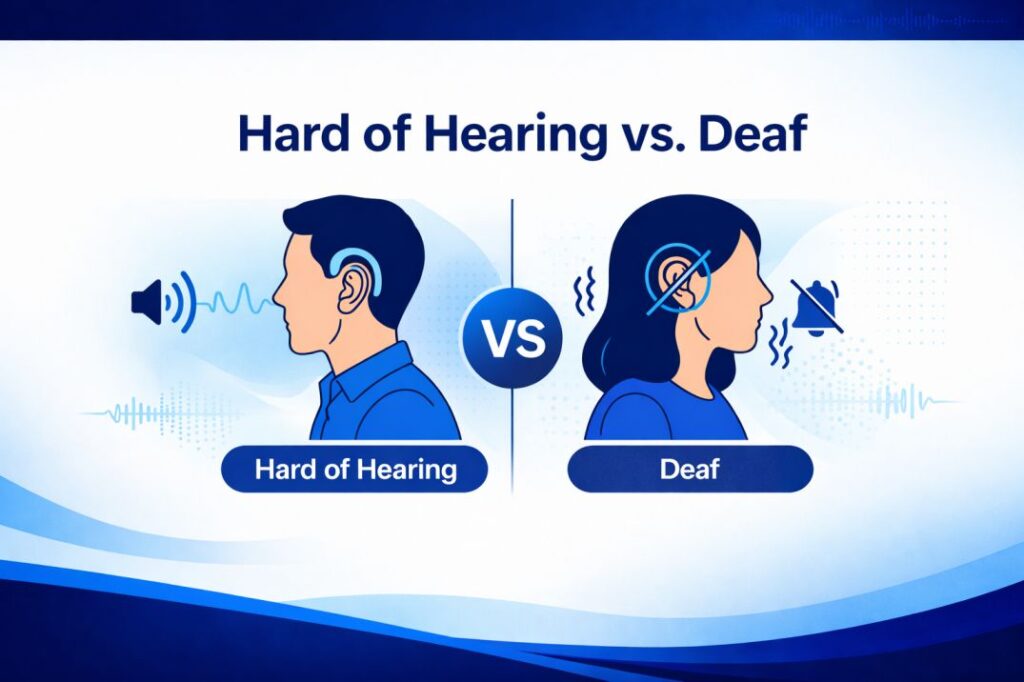
This guide breaks down exactly what “hard of hearing” means, how it differs from deafness, what causes it, and most importantly, what practical tools and strategies genuinely help people communicate more confidently every single day.
What Does "Hard of Hearing" Mean?
The term hard of hearing refers to a person who has mild to severe hearing loss but still retains some ability to hear. It is the most widely used medical term to describe people who sit between full hearing ability and complete deafness.
In audiology, the hard of hearing definition covers a hearing threshold range of roughly 26 to 90 decibels (dB) of loss – meaning sounds need to be louder than average for the person to detect them.
The medical term for difficulty hearing varies by context. Audiologists may use the term hearing impairment, though many in the deaf and hard of hearing community prefer “hard of hearing” (often abbreviated HOH) since “impaired” can feel negative or clinical. There is no single perfect term – what matters most is how the individual identifies.
Key point: Being hard of hearing is not the same as being deaf. The meaning of hard of hearing centres on partial hearing loss – there is still sound getting through, even if it is incomplete or distorted.
Hard of Hearing vs. Deaf: Understanding the Difference
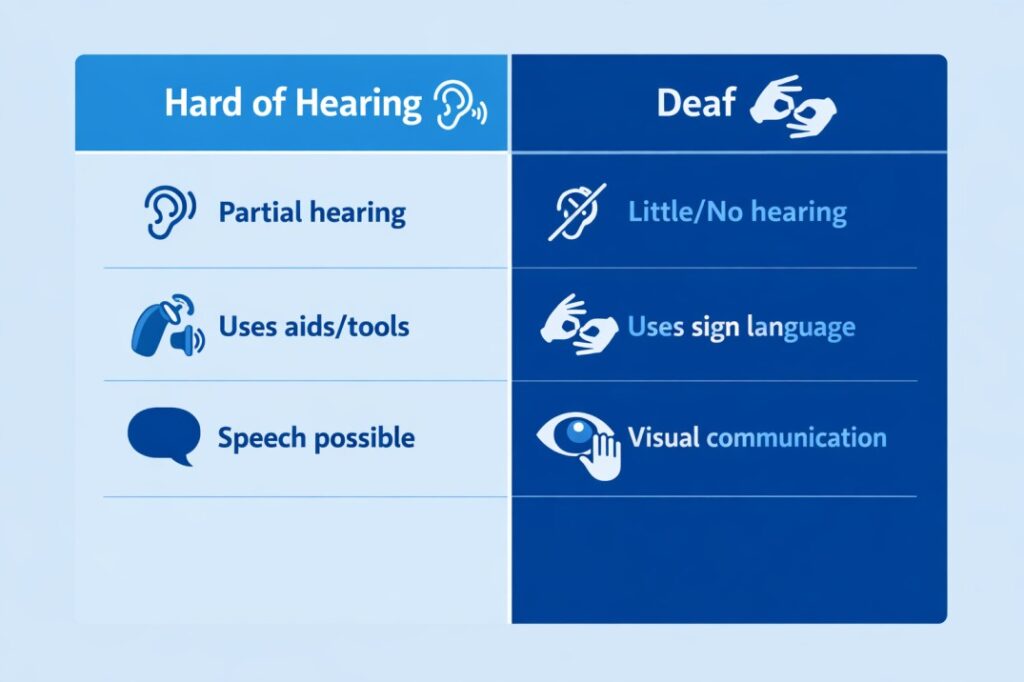
The difference between being hard of hearing and being deaf comes down to the degree of hearing loss and, often, cultural identity.
Clinically speaking:
- Hard of hearing (HOH): Mild to severe hearing loss. Some hearing capability remains. The person may use hearing aids, lip-reading, or assistive technology.
- Deaf (lowercase d): Profound hearing loss – typically 91 dB or above. The person has very little or no usable hearing.
- Deaf (capital D): A cultural identity used by people who are part of the Deaf community, many of whom use American Sign Language (ASL) as their primary language. This is not a medical definition – it is a social and cultural one.
The question “is hearing impaired the same as deaf?”
No. Hearing impaired is a broader umbrella medical term that covers all levels of hearing loss – from mild to profound. Being deaf (clinically) is one category within hearing impairment, while hard of hearing is another. They are related but not interchangeable.
What about “partially deaf”?
Partially deaf is a common informal term that generally means the same thing as hard of hearing – the person can hear some sounds but not all. It is not a formal medical term but is widely understood.
The Four Degrees of Hearing Loss Explained
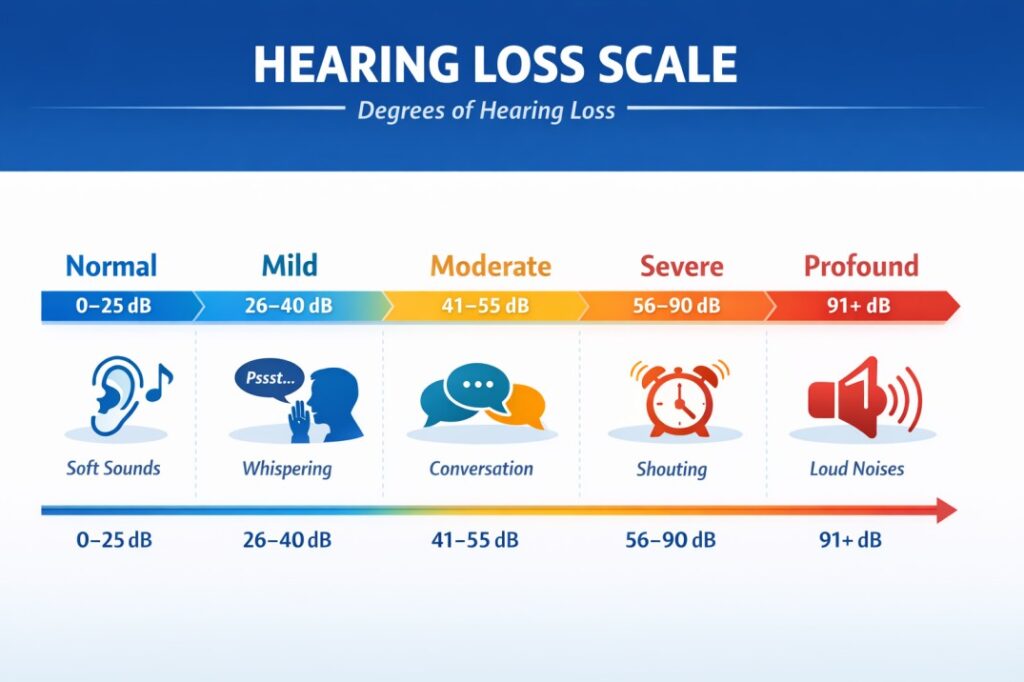
Audiologists classify hearing loss into four main degrees. Understanding where you fall on this scale helps determine what treatment or support will be most effective.
- Mild hearing loss (26–40 dB): Softer sounds – whispers, rustling leaves, quiet speech – are hard to detect. You may miss parts of conversations in noisy environments.
- Moderate hearing loss (41–55 dB): Normal conversational speech is difficult to follow. You frequently ask people to repeat themselves and may struggle in meetings or group settings.
- Severe hearing loss (56–90 dB): Even louder speech is difficult to understand without amplification. This is still technically “hard of hearing” territory in many classifications. Hearing aids or cochlear implants are often recommended.
- Profound hearing loss (91+ dB): Only very loud sounds may be audible, or none at all. This is what clinicians refer to when they use the term deaf. The question “what is profound hearing loss?” is answered simply – it is the most significant level of auditory loss, where the ear can no longer process most sound.
Legally deaf is a separate concept. In most contexts, a person is considered legally deaf when hearing loss reaches a level where they cannot function in everyday hearing environments without significant accommodation – typically 70 dB or above in the better ear.
Signs You May Be Hard of Hearing
Hearing loss is gradual in most cases. Many people do not notice they have become hard of hearing until it significantly affects their daily life. Here are the most common signs to watch for.
Signs of hard of hearing in adults:
- Speech and sounds feel muffled or unclear, even in quiet rooms
- You frequently need to ask people to repeat themselves or speak louder
- Following group conversations – at dinner, in meetings, or on calls – feels exhausting
- You turn the TV or phone volume noticeably higher than others around you
- Phone calls feel especially difficult compared to face-to-face conversations
- You find yourself relying on lip-reading without realising it
- You withdraw from social situations to avoid the frustration of mishearing
Signs of going deaf in children:
- Not startling at loud or sudden noises
- Not responding to their name by 6 months of age
- Delayed speech development – not saying single words by age 1
- Speaking very loudly, or speech that is difficult for others to understand
- Frequently saying “what?” or appearing to ignore instructions
- Sitting very close to the TV or turning it up very loud
- Behavioural issues at school, often rooted in frustration from mishearing
If you are asking yourself “Am I hard of hearing?” or “am I going deaf?” – and you recognise several of these signs – it is worth booking a hearing test. Early detection makes a real difference.
What Causes Hearing Loss?
Hearing loss has many causes, ranging from genetics to lifestyle. Understanding yours is the first step toward finding the right support.
Common causes of hearing loss:
- Age: Age-related hearing loss (presbycusis) is the most common cause. The hair cells in the inner ear gradually break down over time, and by age 65, one in three people has measurable hearing loss.
- Noise exposure: Repeated exposure to loud sounds – whether from concerts, machinery, or headphones at high volume – causes cumulative damage to the hair cells in the cochlea. This damage is permanent.
- Genetics: Some people are born with a predisposition to hearing loss, or with structural differences in their ears. A significant proportion of childhood hearing loss is genetic in origin.
- Infections: Conditions such as meningitis, measles, and mumps can damage the auditory system. Ear infections (otitis media), especially when repeated or untreated, can lead to permanent loss over time.
- Medications: Certain drugs – including some antibiotics, chemotherapy agents, and high-dose diuretics – are ototoxic, meaning they can damage hearing as a side effect.
- Physical injury: A blow to the head, a perforated eardrum, or sudden pressure changes (such as from an explosion) can cause immediate hearing loss.
- Earwax buildup: One of the most common and easily treatable causes of temporary hearing difficulty. A buildup of cerumen physically blocks sound from reaching the eardrum.
How Hearing Loss Changes Daily Life
The medical definition of hard of hearing tells you what you cannot hear. What it does not tell you is the social and emotional weight of living with that loss every day.
People who are hard of hearing often describe feeling like they are constantly on the outside of conversations. In professional settings, they may nod along without catching everything, worried about being seen as inattentive. In social settings, the noise, crosstalk, and rapid back-and-forth can make group events exhausting or isolating.
Listening fatigue is real. When the brain works overtime to fill in gaps in what the ears are not catching, it drains cognitive energy. Many people with hearing loss feel genuinely tired after conversations that seem effortless to others.
Untreated hearing loss is also linked – in research – to higher rates of social withdrawal, depression, and cognitive decline over time. This is why early support matters not just for communication, but for overall wellbeing.
Treatment Options for Hearing Loss
The right treatment depends on the type and degree of your hearing loss. An audiologist can run a full hearing assessment and walk you through the options that fit your specific situation.
Hearing aids are the most widely used treatment for mild to severe hearing loss. Modern digital hearing aids are highly sophisticated – they can filter background noise, adapt to different environments automatically, and pair via Bluetooth to smartphones and other devices.
Cochlear implants are a surgical option for people with severe to profound hearing loss where hearing aids are no longer effective. Unlike a hearing aid, which amplifies sound, a cochlear implant bypasses damaged hair cells and sends electrical signals directly to the auditory nerve. Many deaf people who receive cochlear implants are able to understand speech without lip-reading.
Bone-anchored hearing devices (BAHA) are used for people with conductive hearing loss or single-sided deafness. They transmit sound vibrations through the skull bone directly to the functioning inner ear, bypassing a damaged outer or middle ear.
Surgery can correct structural causes of hearing loss – including a perforated eardrum, otosclerosis (stiffening of the tiny bones in the middle ear), or repeated infections causing chronic damage.
Earwax removal is one of the simplest and most overlooked treatments. Professional removal by a doctor or audiologist – using microsuction or irrigation – can restore hearing quickly when buildup is the cause.
Practical Tools That Help Hard of Hearing People Every Day
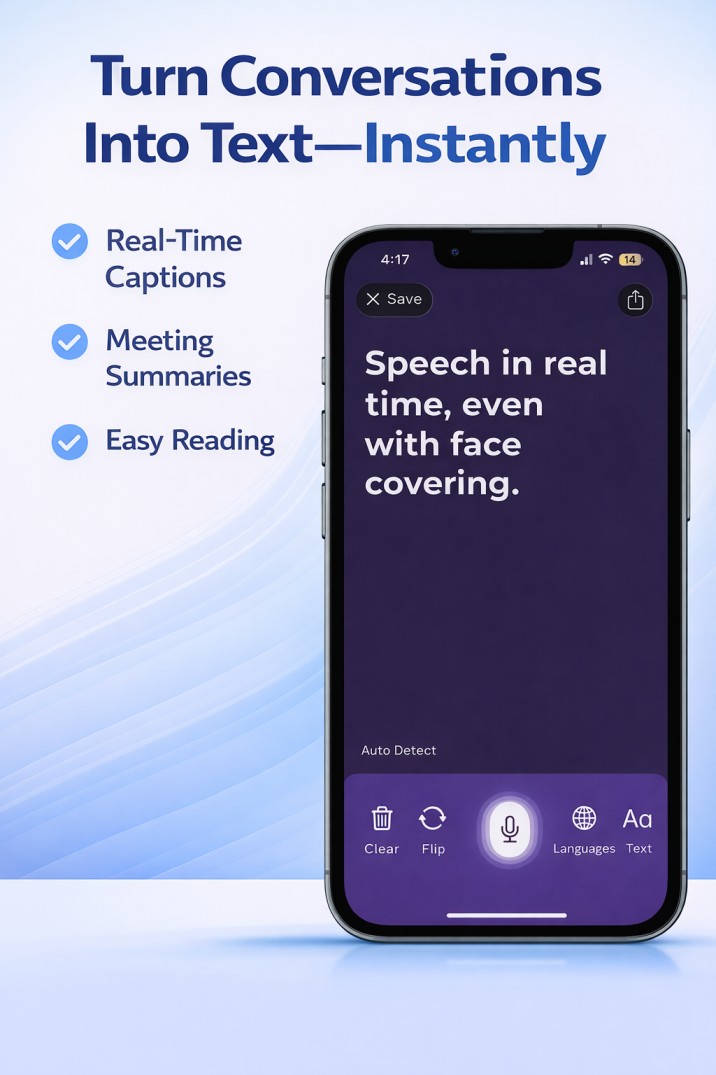
Beyond clinical treatment, a growing range of assistive tools helps people with hearing loss communicate more independently. These are especially valuable in the real-world situations where hearing aids alone are not enough – noisy rooms, unfamiliar accents, rapid-fire conversations, or quiet lip movement.
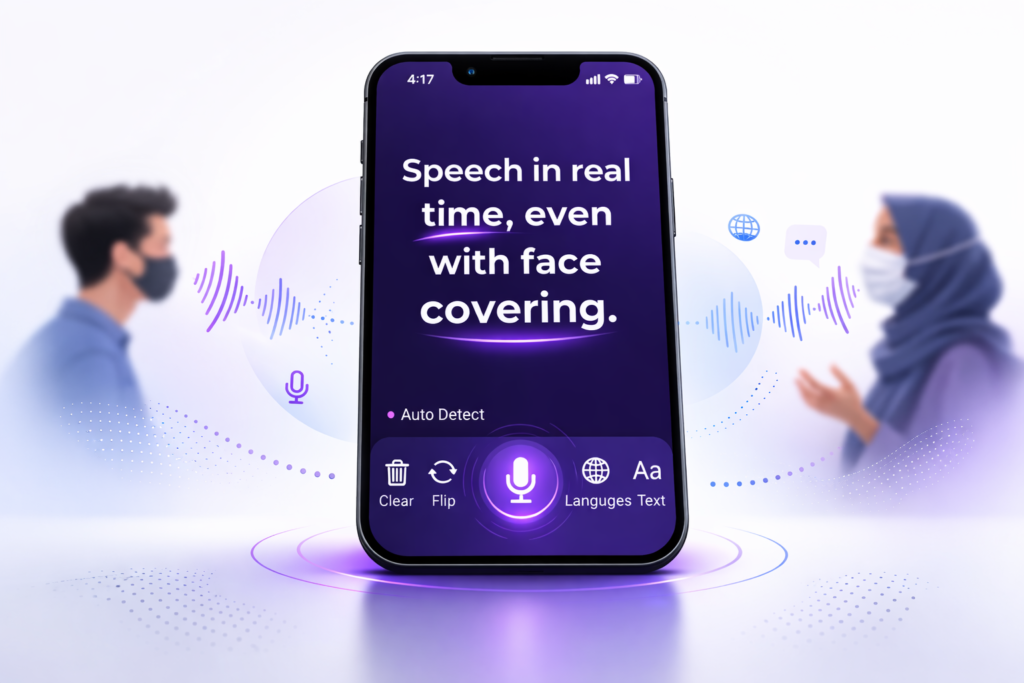
Live transcription apps convert spoken words into real-time text on a screen. This is one of the most practical and immediate tools available today for hard of hearing individuals.
iScribe – available free on iOS at livetranscribe.pro – was built specifically for Deaf and Hard of Hearing users. It transcribes conversations live as they happen, displaying words on your iPhone or iPad in real time. Key features include:
- Real-time speech to text for face-to-face conversations
- AI-generated meeting summaries and key action items
- Customisable font size and text settings for readability
- Ability to upload pre-recorded audio and video files for transcription
- Works across meetings, appointments, social events, and everyday conversations
For people who have spent years feeling left out of conversations, a live transcription tool can be genuinely life-changing – not just practically useful, but emotionally freeing.
Captioning on TV and video calls has become standard across streaming platforms, Zoom, and Microsoft Teams. Turning auto-captions on by default is a simple, zero-cost adjustment that reduces mishearing in digital communication.
Hearing loop systems transmit audio directly to compatible hearing aids in public venues like cinemas, banks, and conference rooms. Look for the hearing loop symbol when you enter a public space.
Vibrating and visual alerts – smart doorbells, flashing smoke alarms, vibrating alarm clocks – reduce the everyday safety risks that come with missing important sounds at home.
ASL and sign language resources remain a vital communication tool, especially for Deaf community members. The sign for hard of hearing in ASL is made by pointing the index finger and bouncing it between the H handshape and a neutral position – a simple but meaningful gesture of identity.
Can Hearing Loss Be Prevented?
Some causes of hearing loss cannot be prevented – genetics and ageing, for example. But a significant proportion of hearing loss, especially noise-induced loss, is entirely avoidable.
Steps that protect your hearing:
- Keep headphone and speaker volume at 60% or below, and take regular listening breaks
- Use earplugs or noise-cancelling protection in loud workplaces or at events
- Avoid inserting objects – including cotton swabs – into the ear canal
- Get vaccinated against infections like measles and meningitis that can damage hearing
- Ask your doctor whether any medications you are taking carry an ototoxic risk
- Get a regular hearing test if you are over 50, or if you work in a noisy environment
If you are already experiencing signs of hearing loss, the most protective thing you can do is see an audiologist soon rather than waiting until the loss becomes severe.
Conclusion
Being hard of hearing is not a single, fixed experience – it exists on a spectrum, and it affects every aspect of how a person moves through the world. Understanding the difference between hard of hearing and deaf, recognizing the signs early, and knowing what tools and treatments exist can genuinely change someone’s quality of life.
The most important takeaways from this guide:
- Hard of hearing refers to mild to severe hearing loss where some hearing remains; deaf refers to profound loss
- Signs include muffled speech, listening fatigue, social withdrawal, and difficulty on calls
- Causes range from ageing and noise exposure to genetics and infection
- Treatment options include hearing aids, cochlear implants, and surgery, depending on cause and degree
- Practical tools – especially live transcription apps like iScribe – fill the gap between clinical treatment and everyday communication
- Early detection and the right support make an enormous difference
If you or someone you care about is hard of hearing, you do not have to navigate every conversation as a struggle. Tools like iScribe exist specifically to give Deaf and Hard of Hearing people the independence to participate fully – in meetings, appointments, social events, and everyday life.
Download iScribe free on iOS and turn any conversation into clear, readable text – instantly.
Frequently Asked Questions
What is the difference between deaf and hard of hearing?
The difference lies in degree. Hard of hearing refers to mild to severe hearing loss, where some hearing remains. Deaf (clinically) refers to profound hearing loss with minimal or no usable hearing. Deaf (culturally, with a capital D) refers to membership in the Deaf community, which has its own language and culture independent of hearing status.
Is being hard of hearing a disability?
In most legal and medical contexts, yes. Hearing loss that affects a person’s ability to communicate, work, or participate in daily life is recognised as a disability, and people with hearing loss are entitled to reasonable accommodations in workplaces, schools, and public services.
What is the medical term for hard of hearing?
The most commonly used medical terms are hearing impairment and hearing loss. HOH (hard of hearing) is the widely accepted abbreviation. Audiologists may also refer to specific loss types such as sensorineural hearing loss, conductive hearing loss, or mixed hearing loss depending on the cause.
Can deaf people hear anything?
It depends on the degree. Many people described as “deaf” – especially those with severe rather than profound loss – can still hear some loud sounds. Profound deafness means no usable hearing, but even then, some individuals may perceive vibrations or very loud sounds as sensation rather than sound.
How do people become deaf or hard of hearing?
The most common causes are aging, prolonged noise exposure, genetics, infections (such as meningitis or repeated ear infections), head injury, and ototoxic medications. Some people are born deaf or hard of hearing due to genetic factors or maternal illness during pregnancy.
Do hearing aids work for profoundly deaf people?
Standard hearing aids are designed to amplify sound and work best for mild to severe hearing loss. For profound hearing loss, hearing aids are often not powerful enough to provide meaningful benefit. In those cases, cochlear implants are typically the more effective option.